CEO Analysis: Waiting for AI to Mature? This is a Business Suicide-Level Strategic Error.
"Should we wait and see the AI bubble deflate a bit before moving?"
This question seems rational on the surface, but behind it lies a fatal assumption:
▍AI is a wave of "asset price trends," not a long-cycle change where "production functions are being rewritten."

Waiting for trends to recede before entering might be reasonable for investment positions; but for an operator who wants to survive and even dominate the market in the next decade, this is equivalent to being absent when infrastructure is sold at a discount, letting the next generation of builders take your moat at lower cost.
I. Why Mainstream AI Strategies Inevitably Fail
Most companies' current AI strategies share several common features:
➤ Conversations are in capital expenditure (CapEx) and budget, not "new products, new revenue, new business lines."
➤ Led by CIO or Chief Data Officer for "pilot projects," but no product owner, no P&L owner.
➤ Treating AI as a "large transformation project," not a builder playground allowing small teams to iterate and experiment.
❌ From a power structure perspective, this approach is almost doomed to fail. The frontline value of AI investment lies in "turning new capabilities into new products, new processes," but power is concentrated in IT/infra; BU heads who actually control P&L are treated as "demand side," not "co-builders." The result is:
❌ Budget in middle office, pressure on front line: Middle office KPIs are "risk control, stability," BU KPIs are "growth, profitability." AI projects hit security, compliance, IT backlog, and get dragged into infinite waiting.
❌ Builders locked out: The group in the company most motivated to use AI to rebuild processes (PMs, field managers, frontline engineers) can't get resources, even access permissions require layers of approval.
"PoC hell" becomes the norm: Ten PoCs a year, none reach scale, because no one is responsible for "Product-Market-Fit + AI," only people responsible for "tech demos."
In terms of incentive mechanisms, this model also has built-in conservative bias. Most CXO compensation is tied to stock price, EPS, operational stability. AI projects almost inevitably bring in the short term:
🙄 Costs rise first (tools, talent, consultants).
🙄 Benefits highly uncertain (especially first two years).
🙄 Failures extremely visible (boards love asking: "What did our AI actually do? Any returns?").
So, people who actually have power to adjust resource allocation rationally choose "delay." The problem is, AI isn't a one-time CapEx, but a structural change altering builder cost curves and market entry barriers: while you delay, those small teams outside without legacy, without political debt, are using a fraction of your annual budget to try 20 ideas you haven't even PoC'd.
II. Who's Being a Builder?
How to correct mistakes on the battlefield?
Case One: Company A — From "AI Project Office" to "Builder Cell"
A global consumer brand (market cap in hundreds of billions), established an "AI Transformation Office" in 2023–2024, reporting directly to CEO, annual budget over $100 million, goal to "design AI solutions for all BUs." Two years later, internal review found:
➤ 80% of resources spent on infra, data governance, and vendor management.
➤ Less than 5 AI products frontline could actually use, mostly automated reports, simple customer service bots.
➤ When they saw GenAI costs drop dramatically, no-code and AI app builders emerge, they became more conservative because sunk costs from earlier investment were too large.
The real turning point came from a group of mid-level product managers' "defection" — they looked at startup demos outside and discovered two brutal facts:
1\. Projects that took 6 months internally, three people using AI builders could make an MVP in 2 weeks outside.
2\. Half the infra tools outside builders were using didn't need this company to "reinvent the wheel."
So they pushed a less glamorous but crucial organizational adjustment: split the AI Transformation Office into several "builder cells," each cell only 3–5 people, directly under BUs, taking BU P&L KPIs, no longer just tied to CEO's "transformation PR." AI middle office no longer leads demand, only provides basic infra, security, and model governance. This change brought two results:
➤ Projects truly tied to revenue and gross margin increased, but single-project budgets got smaller, pace got faster.
➤ Many "things originally planning to build ourselves" changed to standing on existing models and platforms, builders focused energy on process restructuring and distribution.
Case Two: Small Team — From "Tech Demo" to "Cash Flow Product"
Another direction comes from a SaaS team of less than 10 people. They initially built an "AI coding agent." Before late 2023, the path was similar to everyone: tech demos were flashy, daily active users (DAU) performed well, but couldn't find clear customers willing to pay high prices. The turning point was the founder seeing two realities in trends:
➤ Replit, Devin and other AI development tools could already provide extremely high development efficiency for hundreds of dollars/month, traditional "selling coding assistants" gross margins would be compressed to very low.
➤ Those truly willing to pay high prices were "medium-sized companies without engineering organizations, but willing to pay recurring for specific business processes."
They chose to abandon being "infra heroes"
▍Focus on a few specific verticals (e.g., insurance claims processes, automated credit review)
Use AI agents, no-code, and low-cost infra to deliver products that "truly save a team" in 3–4 weeks. Cost structure became:
✅ No longer maintaining large models and infra themselves, use cloud models and existing agent frameworks (monthly spend a few thousand dollars).
✅ MVP shipped by 3–4 people in two weeks, no need for 6–9 months.
For this builder-type entrepreneurship, the most important adjustment isn't technology, but mindset: abandon "I want to compete with giants at the infrastructure layer." They positioned the company "one layer above AI infrastructure," specializing in turning capabilities giants invested billions to build into products truly usable and payable for specific industries. The result: they reached positive cash flow before 2025, and had room to raise a growth round at reasonable valuation when bubbles were at peaks.
III. Behind the Data, Who's Really Reaping AI Dividends?
- Cost Curve: MVP Unit Costs Halved and Halved Again
No-code and AI app builders reduced development costs by about 65% on average, some cases even close to 90%. An MVP that previously took 4–6 months and a full engineering team can now commonly be done by "one product manager + one full-stack engineer + AI agent" in 2–4 weeks.
▍More critical is the nature of "variable costs": Traditional software project failures are often "one big bet," wrong means half a year of wasted resources; in the builder world now, you can test 5–10 MVPs in parallel at scales of thousands to tens of thousands of dollars, failure costs are like marketing A/B tests, not ERP implementations.
- Labor Market: Builder Isn't Just a Title, It's a Combination
Upwork data shows independent knowledge workers' scale and proportion of AI-related work continued rising from 2022–2025: about a quarter of skilled U.S. knowledge workers already work independently, with AI-related service transactions and revenue growth on platforms significantly higher than other project types.
➤ Freelancers skilled at using AI show significantly higher hourly rates and income growth than general freelancers; enterprises "buying capability" increasingly looks like direct connection to individuals, not just through large companies or outsourcing giants.
➤ This group doesn't necessarily want to join your organization as full-time assistants (FTE), they're more like a "builder cloud around your company," always ready to create new products for you or your competitors.
▍Builders no longer only exist within your personnel roster. If organizational design and procurement mechanisms still assume "innovation = full-time teams + annual budgets," then many builders who truly understand AI will permanently stay on your "supply chain" side, not become your long-term competitiveness.
- Inequality and Distribution: Where Do AI Dividends Go?
IMF 2025 research points out AI might reduce wage inequality (because some high-paying jobs will also be automated), but simultaneously increase wealth inequality: those with capital, data, and platforms will gain larger returns.
This is a brutal reminder for enterprise operators: if your company just "buys AI tools to save costs," you're only adding valuation to others' platforms. Those who can truly reap AI dividends are:
➤ Cloud and model providers with capital and infra.
➤ Platforms with distribution channels and customer relationships.
➤ Builders who can stand on these platforms, combining domain knowledge with AI capabilities.
▍"Thus the expert in battle moves the enemy, and is not moved by him"
The management implication is very direct: if you don't want to be squeezed out of the value chain, you must proactively design the company to become a "builder base," not a user working for platforms.
- Bubbles and Infrastructure: Why Now is Actually a Window for Builders?
Goldman Sachs and other institutions have detailed analysis on whether AI is in a bubble: on one hand, AI-related stock valuations are high, cloud giants' capital expenditure (capex) is soaring; on the other, current valuation levels are still below extreme levels of the 2000 internet bubble. Crunchbase data shows AI absorbed nearly half of global venture capital in 2025, with large amounts concentrated in a few large model and infra companies, Q3 mega-round proportions and amounts both hit new highs.
For Builders, This is Actually Structurally Good News:
➤ Capital concentration in bubble phase forces infra players to over-invest in infrastructure and capabilities; even if valuations correct in the future, these capabilities won't disappear, but become public resources builders can "use at a discount."
➤ Gartner's Hype Cycle reminds us: technology goes from "inflated expectations" to "plateau of productivity," with a disillusionment trough in between; many companies will stop losses and exit then, real builders will pick up markets, customers, and talent.
If you do nothing now because you're "afraid of stepping on bubble peaks," you're actually giving up practicing how to turn AI capabilities into products and processes at the moment when infrastructure is most crazy and cheapest (from a builder perspective).
When others cut AI teams during the disillusionment phase, if your organization has already polished builder capabilities, you'll pick up a batch of people who know how to "land under constraints" at very low prices.
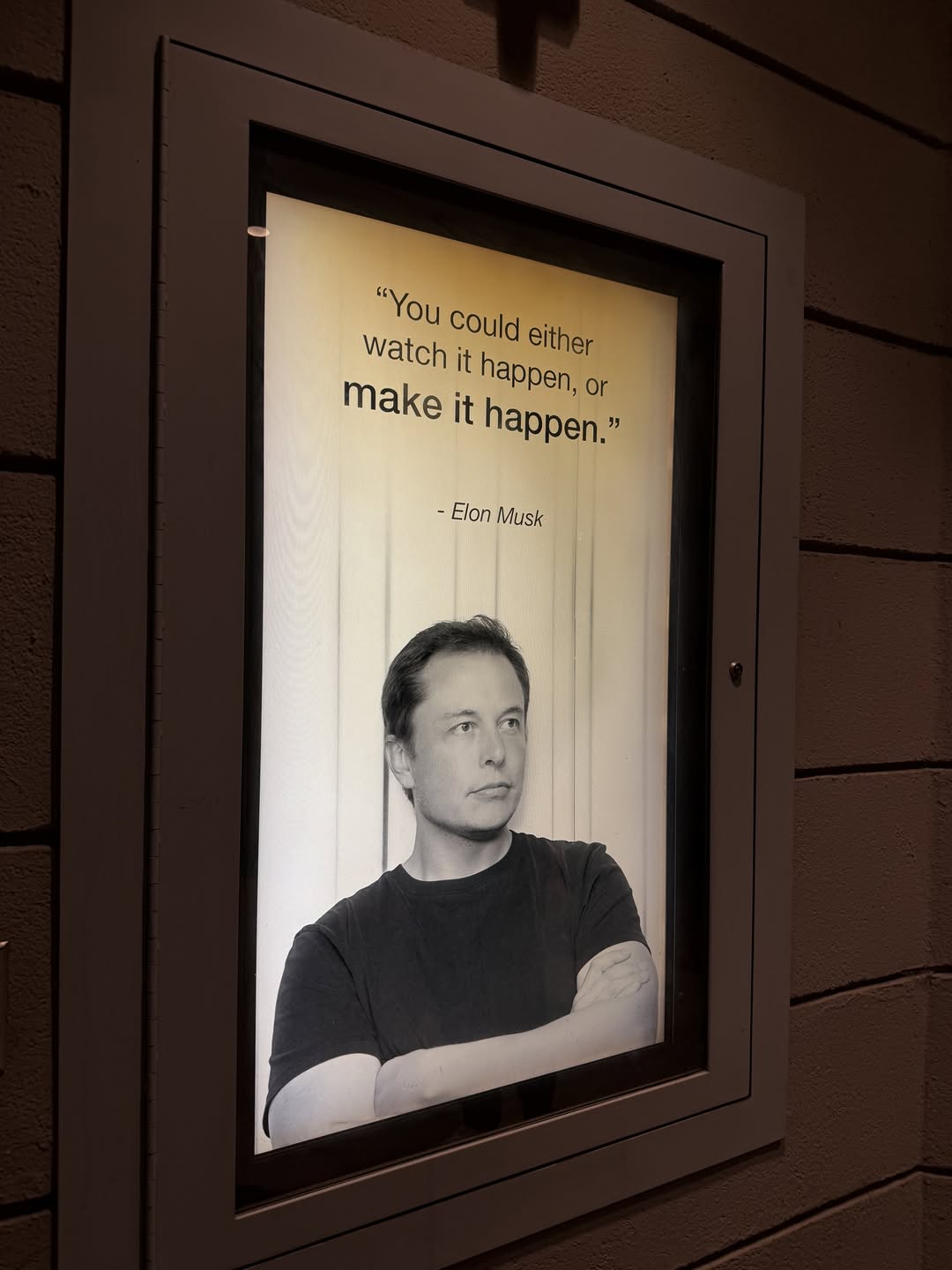
"You could either watch it happen, or make it happen." --
Elon Musk
Attached: My favorite photo from Draper University in Silicon Valley
Get the next one before anyone else
New essays on supply chain governance, ERP and AI adoption. No spam, unsubscribe anytime.
Working through something like this?
I help manufacturers and founders untangle the process before they buy the tool.
Book a conversationWritten by
Wei Ting Chen
I work with manufacturers and founders on the part nobody wants to own: how work actually flows between people, systems and suppliers. Most of what gets blamed on the tool turns out to be a question of who decides what.
Keep reading
- Paper Discussion: Governance Failure Caused by the Bullwhip EffectThe bullwhip effect is not just a supply chain forecast error; it deeply leads to corporate governance failure, causing management to make decisions based on distorted perceptions of reality. This article deeply analyzes three structural problems, including information rewriting and system blind spots, revealing governance discontinuities and emphasizing that rebuilding information structure is the fundamental solution.
- CEO Analysis: The Fall of Social Commerce Giant 'Flip'Why did Flip, a billion-dollar social commerce platform, fall? This article provides an in-depth analysis of its mistakes, revealing fatal lessons about winner-takes-all dynamics in platform economics and misunderstanding the essence of community. Deep dive into subsidy frenzy, creator economics, and market myths, offering valuable warnings for all entrepreneurs and executives.
- Achieve Tenfold Growth with Tenfold DifferenceThis article delves into how "tenfold difference" leads to "tenfold growth," revealing innovative thinking and practical methods for achieving breakthrough goals through cases from Buffett to Musk. Learn the three key characteristics of tenfold innovation: feasibility, structural integrity, and relative stability, and master systematic thinking to create possibilities for tenfold growth in specific areas.