Entrepreneur's Analysis: Notion's Epic Rise from Near Bankruptcy to $10 Billion Valuation
"Notion went from the edge of bankruptcy in 2015, through product reinvention and critical fundraising, from a $2 million seed round in 2013 to a $10 billion Series C in 2021, successfully transformed into a global leading productivity SaaS giant. Today it has 100 million users and is considering equity transactions at a $12 billion valuation, potentially going public by end of 2026."
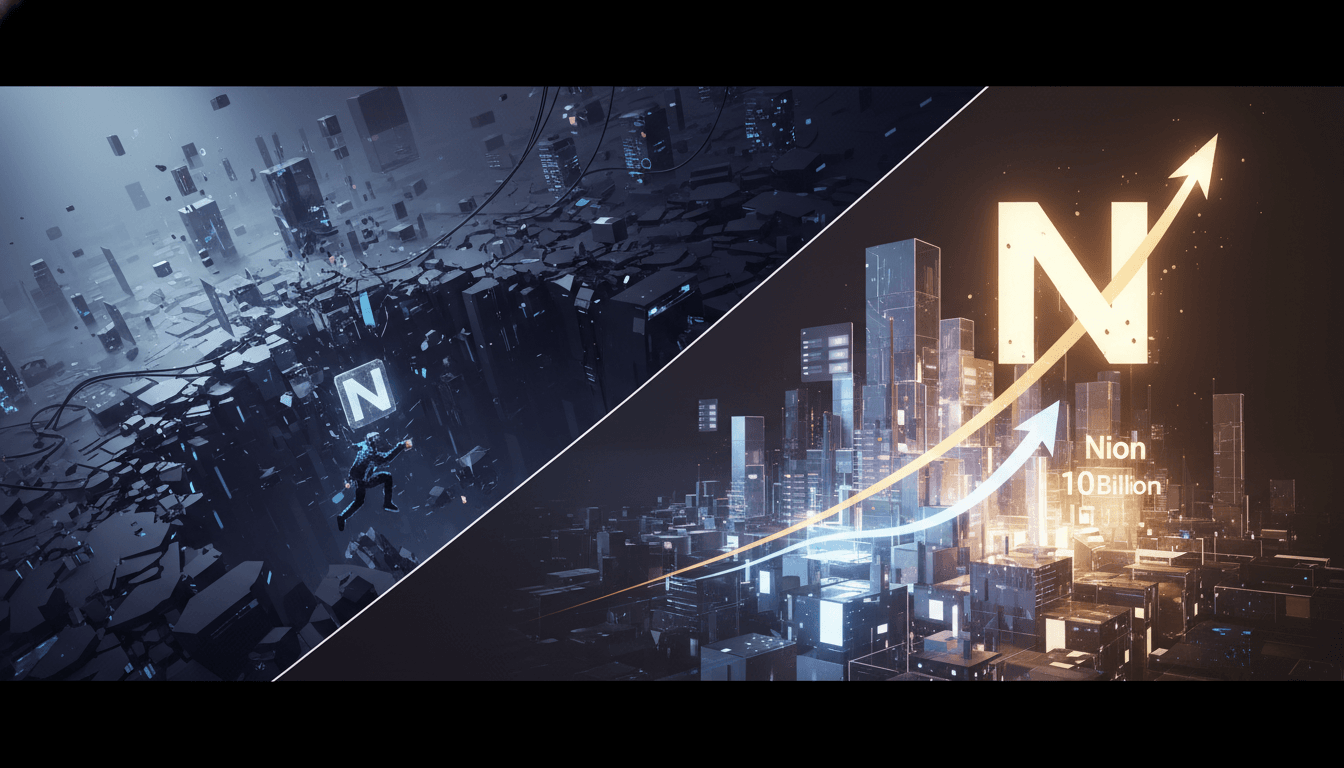
Notion's Fundraising Journey
"Behind every data point lies a person's story."
This statement found its deepest confirmation in Notion's funding journey. This isn't just a series of cold numbers, but a dramatic, sweat-filled, visionary hero's journey.
Prologue: The Dark Forest on the Edge of Despair
The story's beginning was fog and struggle. In 2013, Notion was founded by Ivan Zhao and Simon Last, with the grand vision of creating an "all-in-one digital workspace." However, the early path was so rugged. In 2015, Notion's product frequently crashed due to poor tech stack, market response was lukewarm, funds drained like quicksand, the company once teetered on bankruptcy's edge.
What is "on the edge of bankruptcy"?
Imagine your bank account only has enough to sustain operations for a few months. Without new revenue or investment, the company can't pay employee salaries, rent, and other expenses, finally forced to close. This is the "runway depletion" dilemma many startups face in early stages.
That was a cold summer. Founders Ivan Zhao and Simon Last made an extremely difficult decision: fire all employees, close the San Francisco office, move to Kyoto, Japan, cutting costs in extreme ways. Ivan's mother even provided a $150,000 emergency loan to keep this faint flame alive. In the silence of a foreign land, they began product rebuilding from scratch, every line of code condensed with do-or-die determination.
The Glimmer of Rebirth
Kyoto's tranquility brought reflection and clarity. They realized the product needed to be more intuitive, more flexible. In 2016, the phoenix-rising Notion 1.0 finally launched, no longer an incomprehensible "software editor," but a clean, multi-functional productivity tool integrating notes, tasks, and databases.
What is "Product-Market Fit"?
This refers to your product's ability to meet the needs of large numbers of users in the market and resonate with them. When product-market fit is achieved, users actively use your product and spread it through word of mouth, forming natural growth.
This transformation succeeded. In August 2016, Notion launched on Product Hunt, immediately becoming the most popular product of the day, week, and month. Users began spontaneously sharing Notion usage, word-of-mouth effects spread it rapidly globally, with 80% of users from outside the U.S. This proved their persistence on product core value was recognized by the market.
Rise: Capital's Favor and Acceleration
As user base steadily grew, Notion gradually attracted investors' attention. In 2019, Notion reached 1 million users.
- Seed Round: As early as March 2013, Notion raised $2 million in seed funding, laying the foundation for early development.
- Series A: In April 2019 (some sources say July), Notion announced completing $10 million (some sources say $18.2 million) Series A, valuation reaching $800 million. This round was led by Sequoia Capital, marking mainstream investment community's initial recognition of Notion's potential.
What is "Series A"? This is a startup's first large-scale institutional investment after successfully validating product concept and showing user growth. Goal is to further expand team, optimize product, and accelerate market expansion. The real explosion happened in 2020. Global pandemic made remote work the new normal, enterprises and individuals' demand for digital collaboration tools surged. Notion's flexible, all-in-one nature perfectly fit this need, user base quadrupled in a short time.
- Series B: In April 2020 (some sources say July), Notion rode the momentum to complete $50 million Series B, valuation soaring to $2 billion. Index Ventures led this round, closing the investment within 36 hours of Ivan Zhao starting fundraising, showing capital markets' extreme confidence. Notion officially entered "unicorn" status.
- Series C: In October 2021, Notion completed $275 million Series C, company valuation reaching an astonishing $10 billion. This round was co-led by Coatue Management and Sequoia Capital. Notably, Ivan Zhao maintained extremely high control throughout fundraising, venture investors didn't get board seats, he personally still holds at least 30% of the company. This is extremely rare in tech startups, reflecting investors' full trust in the founder's vision and control.
Notion not only focused on core features, but also continued driving product innovation. In February 2023, Notion AI service officially launched, integrating powerful AI capabilities into workflows, helping users automate tasks and optimize content. By September 2024, Notion's user count reached 100 million, proving product's lasting appeal and market breadth.
The Never-Ending Journey
As of December 2025, Notion is still exploring new possibilities. According to reports, Notion is discussing a transaction allowing some employees and early investors to sell shares, valuation estimated around $12 billion, and may consider IPO as early as end of 2026. This isn't just recognition of Notion's past achievements, but huge expectations for its future potential.
From near bankruptcy to $10 billion valuation, Notion's funding journey is a dramatic epic. It tells us true value comes not just from funding, but from founders' persistence on vision, product refinement, and courage to seek breakthroughs in desperation. Notion's story is the best footnote in the digital age about faith, persistence, and ultimate glorious transformation.
Notion's success was never because it was right from the start, but because when it was about to die, it chose to rebuild the product from scratch, and only obsessed over one thing: turning "complex work" into a simple system anyone can master.
From Kyoto's do-or-die battle, to product-market fit, to $10 billion valuation, Notion proved one thing: Companies that truly become giants aren't built by capital, but teams willing to rewrite everything for users even at extreme lows.
Funding is just the result. Belief and product are the cause.
延伸閱讀:Success is Not a Miracle, But Accumulation
支持我,持續關注更多優質好文: Buy Me A Coffee
Get the next one before anyone else
New essays on supply chain governance, ERP and AI adoption. No spam, unsubscribe anytime.
Working through something like this?
I help manufacturers and founders untangle the process before they buy the tool.
Book a conversationWritten by
Wei Ting Chen
I work with manufacturers and founders on the part nobody wants to own: how work actually flows between people, systems and suppliers. Most of what gets blamed on the tool turns out to be a question of who decides what.
Keep reading
- Paper Discussion: Governance Failure Caused by the Bullwhip EffectThe bullwhip effect is not just a supply chain forecast error; it deeply leads to corporate governance failure, causing management to make decisions based on distorted perceptions of reality. This article deeply analyzes three structural problems, including information rewriting and system blind spots, revealing governance discontinuities and emphasizing that rebuilding information structure is the fundamental solution.
- CEO Analysis: The Fall of Social Commerce Giant 'Flip'Why did Flip, a billion-dollar social commerce platform, fall? This article provides an in-depth analysis of its mistakes, revealing fatal lessons about winner-takes-all dynamics in platform economics and misunderstanding the essence of community. Deep dive into subsidy frenzy, creator economics, and market myths, offering valuable warnings for all entrepreneurs and executives.
- Achieve Tenfold Growth with Tenfold DifferenceThis article delves into how "tenfold difference" leads to "tenfold growth," revealing innovative thinking and practical methods for achieving breakthrough goals through cases from Buffett to Musk. Learn the three key characteristics of tenfold innovation: feasibility, structural integrity, and relative stability, and master systematic thinking to create possibilities for tenfold growth in specific areas.